

Intro
ADR vs Occupancy in Hotels is one of the most common debates in revenue management. Ask a group of hoteliers what matters most, and you’ll usually hear one of two answers:
“We need to push ADR.” or “We need to fill more rooms.”
But the truth is both can be right, and both can be completely wrong.
One of the biggest mistakes in hotel revenue management is focusing too heavily on a single metric. A high ADR looks great in reports. Strong occupancy feels like success. But neither tells the full story.
What really matters is how those two metrics work together to drive revenue.
The high ADR trap
Imagine two hotels with 100 rooms.
Hotel A sells rooms at an average rate of €200 and reaches 50% occupancy. That sounds impressive, right? But the problem is that the half of the hotel’s inventory remains empty.
Now look at Hotel B. Its ADR is lower, €150, but occupancy reaches 80%.
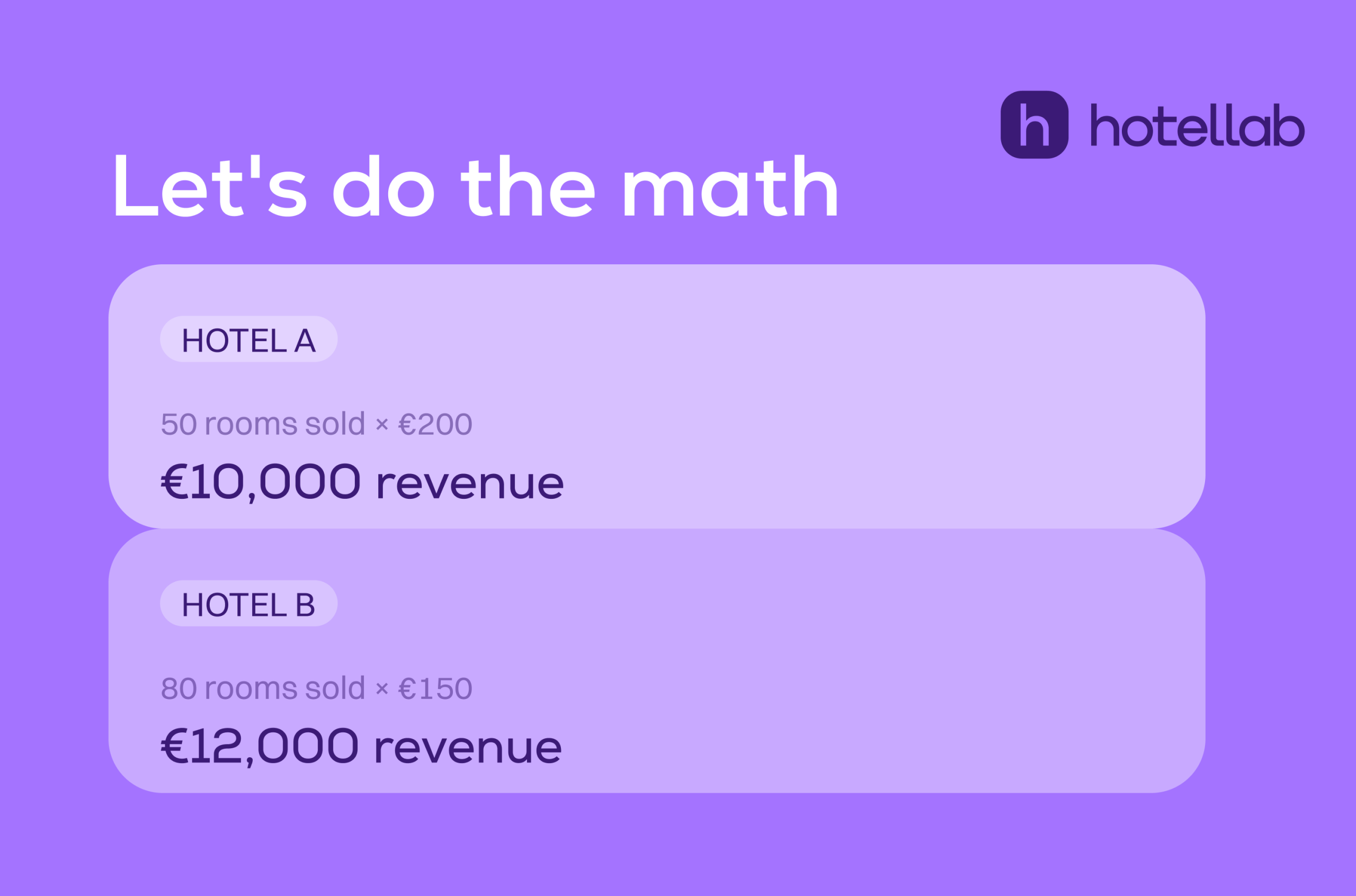
Despite charging less, Hotel B earns more.
That’s why ADR alone can be misleading. Raising rates without considering demand often means leaving money on the table through unsold inventory.
The Occupancy obsession
Now let’s flip the situation and break down what happens when hotels become obsessed with occupancy.
Every empty room feels like a missed opportunity, so rates are lowered to stimulate demand, and soon the hotel is running at 95-100% occupancy. Sounds great, right?
Not necessarily. A full hotel achieved through heavy discounting can be less profitable than a hotel operating at lower occupancy with healthier rates.
For example:
- Hotel A with 100 rooms sold at €90 = €9,000 revenue
- Hotel B with 80 rooms sold at €130 = €10,400 revenue
The second hotel sells fewer rooms and still generates more revenue.
This is why experienced revenue managers rarely consider occupancy as the ultimate goal. That doesn’t mean occupancy is unimportant — in fact, there are situations where driving occupancy is exactly the right move.
When higher occupancy is actually the right strategy
Of course, maximizing ADR is not always the answer either.
There are periods when prioritizing occupancy makes perfect business sense.
Examples include:
- Low-demand seasons
- New hotel openings
- Market downturns
- Strategic efforts to increase visibility and guest reviews
- Building customer loyalty and repeat business
During these periods, slightly lower rates can help generate demand, maintain cash flow, and support long-term growth.
The key is understanding when occupancy should drive strategy and when pricing should take priority.
Successful hotels continuously adjust this balance based on demand patterns, seasonality, market conditions, and business objectives. Accurate forecasting helps revenue teams identify when occupancy should be prioritized and when higher rates are likely to generate better results.
Why revenue teams focus on RevPAR
So if ADR doesn’t tell the whole story, and occupancy doesn’t either, what should hotels focus on?
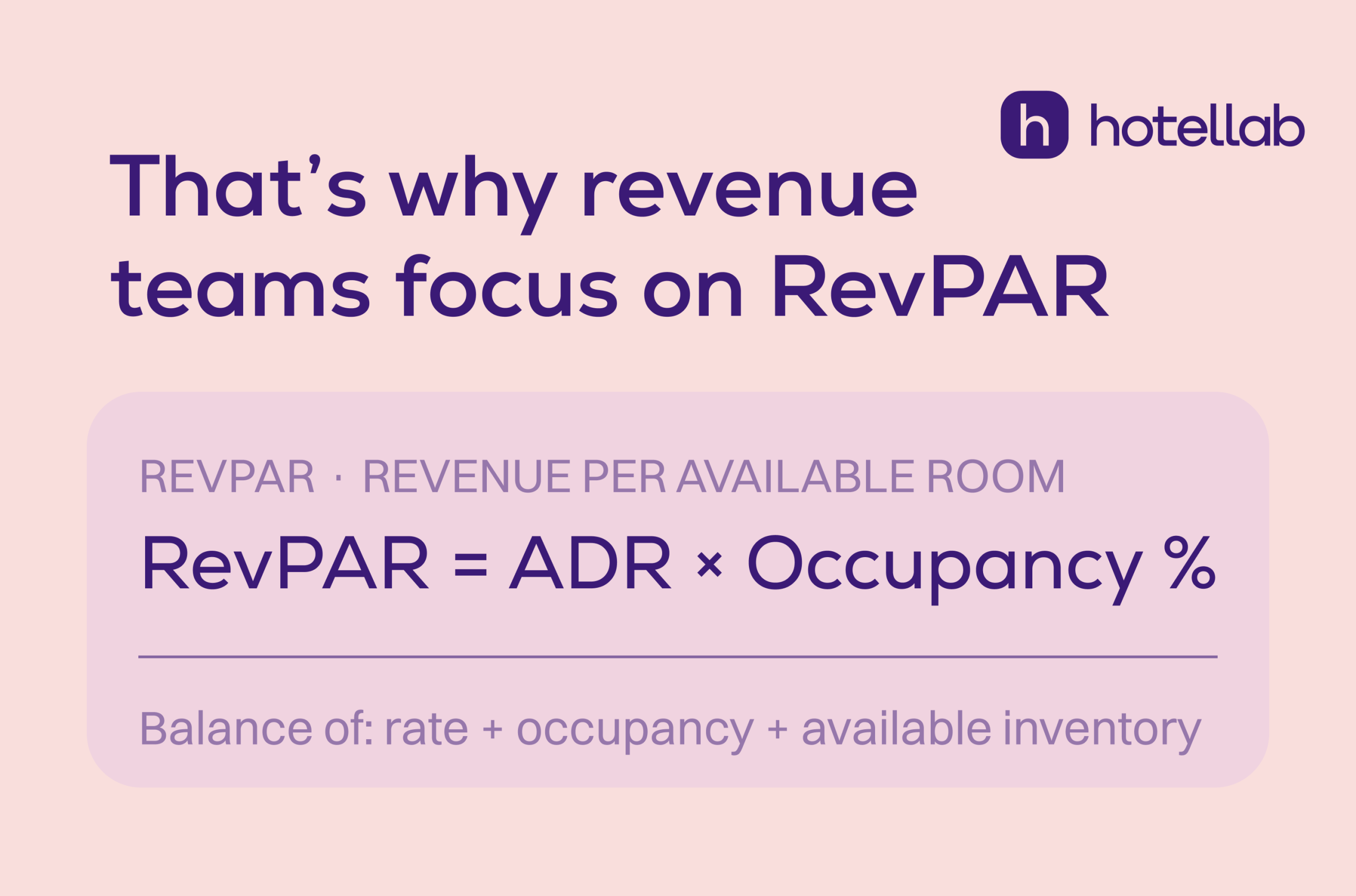
This is where revenue managers focus heavily on RevPAR (Revenue Per Available Room). It combines both pricing and occupancy performance into a single metric.
The formula is:
RevPAR = ADR × Occupancy Rate
Unlike ADR or occupancy alone, RevPAR shows how effectively a hotel converts its available inventory into revenue.
A strong RevPAR indicates that a hotel is successfully balancing room rates and demand rather than overemphasizing one metric at the expense of the other. Combining RevPAR analysis with advanced business intelligence allows hotels to make more informed revenue decisions.
Revenue management is about balance, not extremes
The most successful hotels do not ask:
“How can we achieve the highest ADR?” or “How can we reach 100% occupancy?”
Instead, they ask:
- Can demand support a higher rate?
- Are we leaving revenue on the table?
- Should we hold pricing or stimulate bookings?
- Which guest segments generate the highest value?
- What is the optimal balance between rate and occupancy today?
Answering these questions consistently requires access to reliable pricing recommendations based on real-time market data.
Conclusion
Hotel success is not defined by the highest ADR or the highest occupancy rate alone.
And the ADR vs Occupancy in Hotels debate has no simple answer. The most profitable hotels know how to balance pricing and demand, using metrics like RevPAR to maximize long-term revenue and profitability. A strong hotel revenue management strategy combines data, technology, and market insights to identify the right opportunities at the right time.
With hotellab’s all-in-one revenue management platform, hotels can optimize pricing, improve RevPAR, and build a more effective hotel revenue management strategy.
Ready to unlock your hotel's full revenue potential?
Your real goal isn’t just higher ADR or higher occupancy, it’s sustainable revenue growth and long-term profitability.
Book a free demo today and discover how hotellab can help you grow revenue more efficiently.